
Compression Education
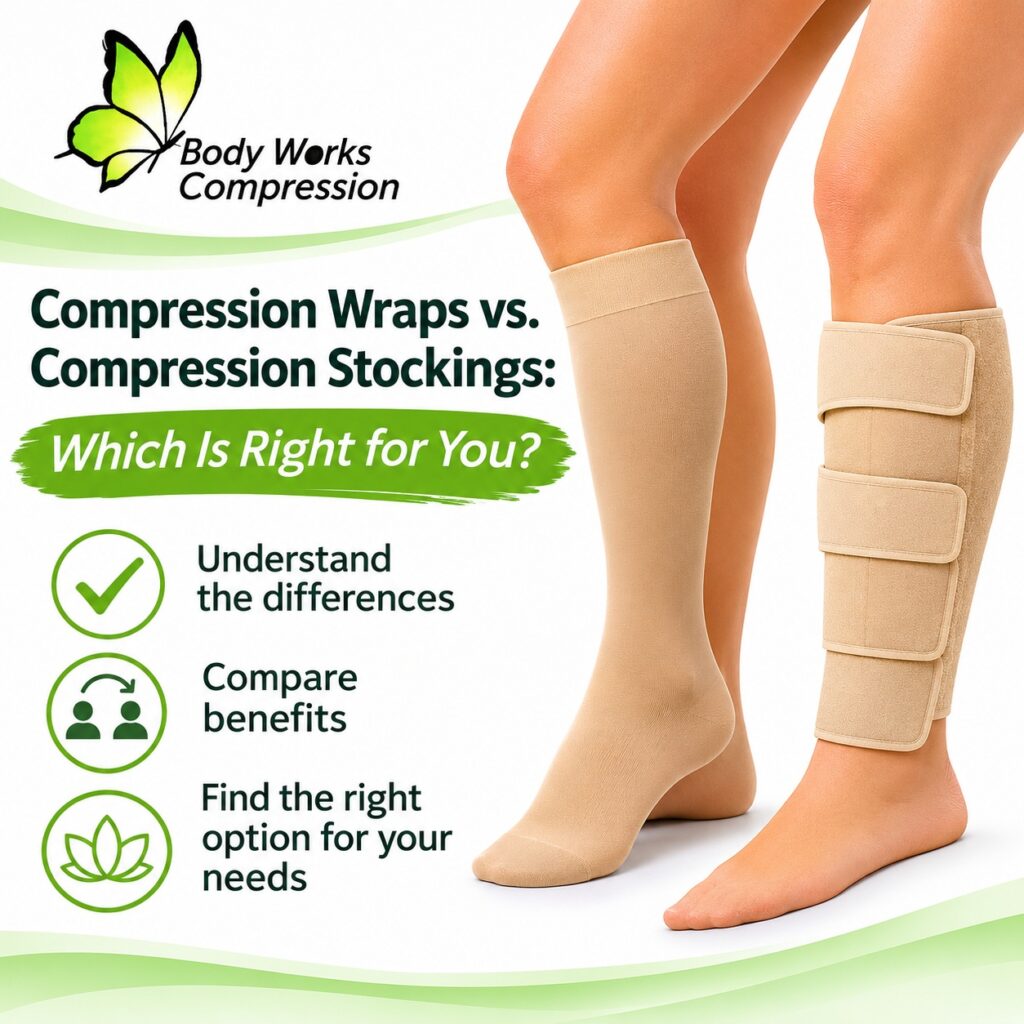
Compression Wraps vs. Compression Stockings: Which Is Right for You?
Nov
Understanding the differences can help you find comfortable, effective compression support.
If you experience swelling in your legs or are managing a condition such as lymphedema or chronic venous insufficiency, you may have been advised to wear compression garments.
But with so many options available, how do you know whether traditional compression stockings or adjustable compression wraps are the better choice?
Both can play an important role in compression therapy, but they work differently and offer distinct advantages.
At Body Works Custom Compression, we believe understanding your options is the first step toward finding compression garments that fit your needs and lifestyle.
What Are Medical Compression Stockings?
Medical compression stockings are specially designed garments that apply controlled pressure to the legs. Many use graduated compression, with the greatest pressure near the ankle and progressively less pressure farther up the leg.
This pressure helps support venous blood flow and can assist in managing certain types of swelling.
Compression stockings are available in several styles, including:
- Knee-high compression stockings
- Thigh-high compression stockings
- Pantyhose and waist-high garments
- Open-toe and closed-toe designs
- Ready-to-wear and custom-fitted garments
Depending on the product, compression levels may include 15–20 mmHg, 20–30 mmHg, 30–40 mmHg, and higher prescription strengths.
Why people choose compression stockings
Compression stockings offer a streamlined fit that can be worn under everyday clothing. They are available in a variety of fabrics, colors, and styles, making them a practical choice for many people who need consistent compression throughout the day.
Brands such as JOBST, Juzo, Medi, and Sigvaris offer numerous options for different compression needs.
However, traditional stockings can sometimes be challenging to put on or remove, particularly for individuals with limited hand strength, reduced mobility, or significant swelling.
What Are Adjustable Compression Wraps?
Adjustable compression wraps are therapeutic garments that typically use overlapping fabric panels and hook-and-loop closures to apply compression.
Unlike traditional stockings, which are pulled over the foot and leg, adjustable wraps are positioned around the limb and secured using straps.
Many designs allow the wearer to adjust the fit without completely removing the garment.
Why people choose adjustable compression wraps
Adjustable wraps may be especially helpful for individuals who:
- Have difficulty putting on traditional compression stockings
- Experience changes in limb size throughout the day
- Have limited hand strength or mobility
- Need an alternative to traditional compression bandaging
- Prefer a garment that can be opened and repositioned
Some wraps are designed for daytime use, while others have different intended uses. Compression pressure and adjustability vary by manufacturer and model.
Popular adjustable compression systems include JOBST FarrowWrap, Sigvaris Compreflex, and L&R Solaris ReadyWrap.
Compression Wraps vs. Compression Stockings: A Side-by-Side Comparison
| Feature | Compression Stockings | Adjustable Compression Wraps |
|---|---|---|
| Application | Pulled onto the leg | Wrapped around the limb and secured |
| Fit adjustment | Generally requires changing size or garment | Many models allow strap adjustments |
| Appearance | Smooth, hosiery-like fit | More structured, with visible straps |
| Ease of use | May require donning aids | May be easier for some individuals |
| Swelling changes | Fit may change as limb size changes | Some designs accommodate changes through adjustment |
| Compression | Available in prescribed compression levels | Compression depends on wrap design and application |
| Everyday clothing | Often fits easily under clothing | May require roomier clothing or footwear |
Neither option is automatically better. The appropriate choice depends on your medical needs, prescribed compression, limb measurements, and ability to use the garment correctly.
Which Option May Be Better for Lymphedema?
Lymphedema occurs when lymphatic fluid accumulates in tissues, causing swelling that may require ongoing management.
Compression is an important component of many lymphedema treatment plans.
For some individuals, compression stockings are appropriate for maintaining swelling control once limb size is relatively stable.
Others may benefit from adjustable compression wraps, particularly when swelling fluctuates or traditional stockings are difficult to apply.
Some people use different garments at different stages of treatment.
Important: Lymphedema management is individualized. A certified lymphedema therapist, healthcare professional, or qualified compression garment fitter can help determine the appropriate garment, compression level, and wearing schedule.
Are Adjustable Compression Wraps Easier to Put On?
For many people, ease of application is one of the biggest advantages of adjustable wraps.
Traditional compression stockings often require pulling a snug garment over the foot, ankle, and calf. This can be challenging for people with arthritis, limited flexibility, or reduced hand strength.
Adjustable wraps generally open fully, allowing them to be positioned around the limb before fastening.
However, wraps still require correct positioning and tension. Some individuals may need assistance to apply them properly.
If you prefer traditional stockings but struggle with application, donning aids may also make the process easier. For additional tips, visit our How to Put On Compression Garments guide for helpful information about applying and removing compression garments.
Can Compression Wraps Replace Compression Stockings?
In some situations, yes.
Adjustable compression wraps can be an alternative to traditional stockings when recommended by a healthcare professional.
However, they are not interchangeable in every situation. Different garments provide different compression characteristics, and the appropriate choice depends on the condition being treated.
A person may also benefit from using both types of garments at different times, depending on their treatment plan.
Explore Compression Solutions at Body Works
At Body Works Custom Compression, we offer a wide selection of medical-grade compression garments from trusted manufacturers.
Adjustable compression systems designed to provide customizable support for individuals managing swelling and certain venous or lymphatic conditions.
Adjustable compression wraps available in different configurations for the legs and other areas, depending on the product.
Adjustable compression garments designed to offer an alternative to traditional compression bandaging in appropriate treatment settings.
A broad selection of compression hosiery, including knee-high and thigh-high garments in different fabrics, styles, and compression levels.
Juzo Wraps & Specialty Garments
Juzo offers adjustable compression wraps and specialty garments designed to help manage swelling and support individual compression needs. Explore our Juzo Wraps & Specialty Garments collection to discover additional compression options.
Explore our full range of compression products at Body Works Custom Compression.
Frequently Asked Questions
Are compression wraps as effective as compression stockings?
Both can provide therapeutic compression when appropriately selected and applied. Effectiveness depends on the individual’s condition, garment design, fit, compression level, and consistent use.
Can I wear adjustable compression wraps all day?
Some adjustable wraps are designed for daytime wear, but recommended wearing schedules vary. Follow the manufacturer’s instructions and your healthcare professional’s guidance.
Can I sleep in compression stockings or wraps?
Do not assume that daytime compression garments are suitable for sleeping. Nighttime compression requires garments specifically intended for that purpose and guidance from your healthcare professional.
What if my legs change size throughout the day?
Adjustable compression wraps may offer additional flexibility when swelling fluctuates. However, significant changes in limb size should be discussed with your healthcare professional or compression fitter.
Do I need professional measurements?
Proper sizing is essential for effective and comfortable compression. Measurements are especially important for higher compression levels, unusual limb shapes, and custom garments.
Can I choose my own compression level?
For medical conditions such as lymphedema or significant venous disease, compression strength should be selected with appropriate professional guidance. Compression is not suitable for everyone, including some individuals with serious arterial circulation problems.
Finding the Right Compression for Your Lifestyle
The best compression garment is one that provides the appropriate therapeutic support, fits correctly, and can be used consistently.
Whether you prefer the streamlined appearance of traditional compression stockings or the adjustability of compression wraps, understanding the differences can help you make a more informed decision.
At Body Works Custom Compression, we’re committed to offering quality compression products and helpful information to support your individual needs.
Explore our compression collections today: www.bodyworks-compression.com
Medical disclaimer: This article is for educational purposes only and is not a substitute for professional medical advice. Consult your healthcare professional before starting or changing medical compression therapy.
